
Poly wrapping, banding or enveloping: which packing suits your mailing?
Poly wrapping (sealen) means packing your mailing in film, banding (banderen) means putting a paper wrap around it, and enveloping (couverteren) means putting it in an envelope. Which one you choose depends on three things: does the content need to be visible, how many loose items go in, and do you want to avoid plastic. We do all three by machine, on our own floor.
The three forms side by side
| Poly wrapping | Banding | Enveloping | |
|---|---|---|---|
| Wrapper | Film, with us cane sugar film | Paper wrap, the banderol | Paper envelope |
| Content visible | Yes, through the film | Mostly, the banderol sits around it | No, only through a window |
| Loose items | Yes, for example a reply card or sample | Around one printed piece, such as a magazine. A loose insert is possible but less secure | Yes, a letter with up to six inserts |
| Where the address goes | On the print itself or on a loose address carrier, readable through the film | On the banderol | On the envelope, or on the letter behind the window |
| Plastic | Yes, plant-based and recyclable | No | No, only a window if you choose one |
| Format | A6 to A3, up to about 2.5 centimetres thick | Up to A4+, up to 1 centimetre thick. Banderol at least 10.5 centimetres wide | Envelopes from C6 to C4 |
| Our machine | Up to 12,000 an hour | Up to 8,000 an hour | Up to 10,000 to 12,000 an hour |
| Typical for | Magazine with insert, folder with sample, multi-part mailing | Periodical, magazine, members' magazine, folder | Personal letter, mailing with several inserts |
Does it need no wrapper at all? Then a self-mailer or sending it unwrapped is the lightest and simplest option: the address goes straight onto the print. That works for a magazine too, see below. Every wrapper adds to the weight, and so to the postage. How that works is on saving on postage.
What is poly wrapping?
Poly wrapping is packing print or a mailing in film. The film goes tightly around the item and the edges are heat-sealed. What is inside stays together and arrives undamaged, and the recipient sees straight away what they are getting.
When do you choose poly wrapping? When the mailing has more than one item that must stay together: a magazine with a loose folder, a mailing with a reply card or a sample. And when you want the content to be visible, because the image on the front has to do the work.
Where does the address go? Not on the film; that is not possible. The address is on the top printed item and readable through the film, or on a loose address carrier placed on top inside the film. Handy when the address cannot or may not go on the print itself.
How it works here. Our sealing machine handles up to 12,000 mailings an hour, more than three a second. It wraps anything from A6 to A3, up to about two and a half centimetres thick: from a card to a solid magazine with inserts. It sits in one continuous line with printing and folding, set up for SRA3+ (340 × 550 mm). So a mailing goes from the digital press via the folding machine into the film, without anyone having to pick it up in between.
The film. As standard we wrap in cane sugar film of 12 micron. Ordinary seal film is about 20 micron, so every mailing carries noticeably less material. Cane sugar film is a bio film: the raw material is cane sugar instead of crude oil. The film is recyclable and belongs with the plastic waste. It is not biodegradable and not compostable; that difference is often confused. We switched over entirely in 2018 and have hardly used ordinary film since. More on that in mailing more sustainably.
How our sealing machine works: up to 12,000 mailings an hour
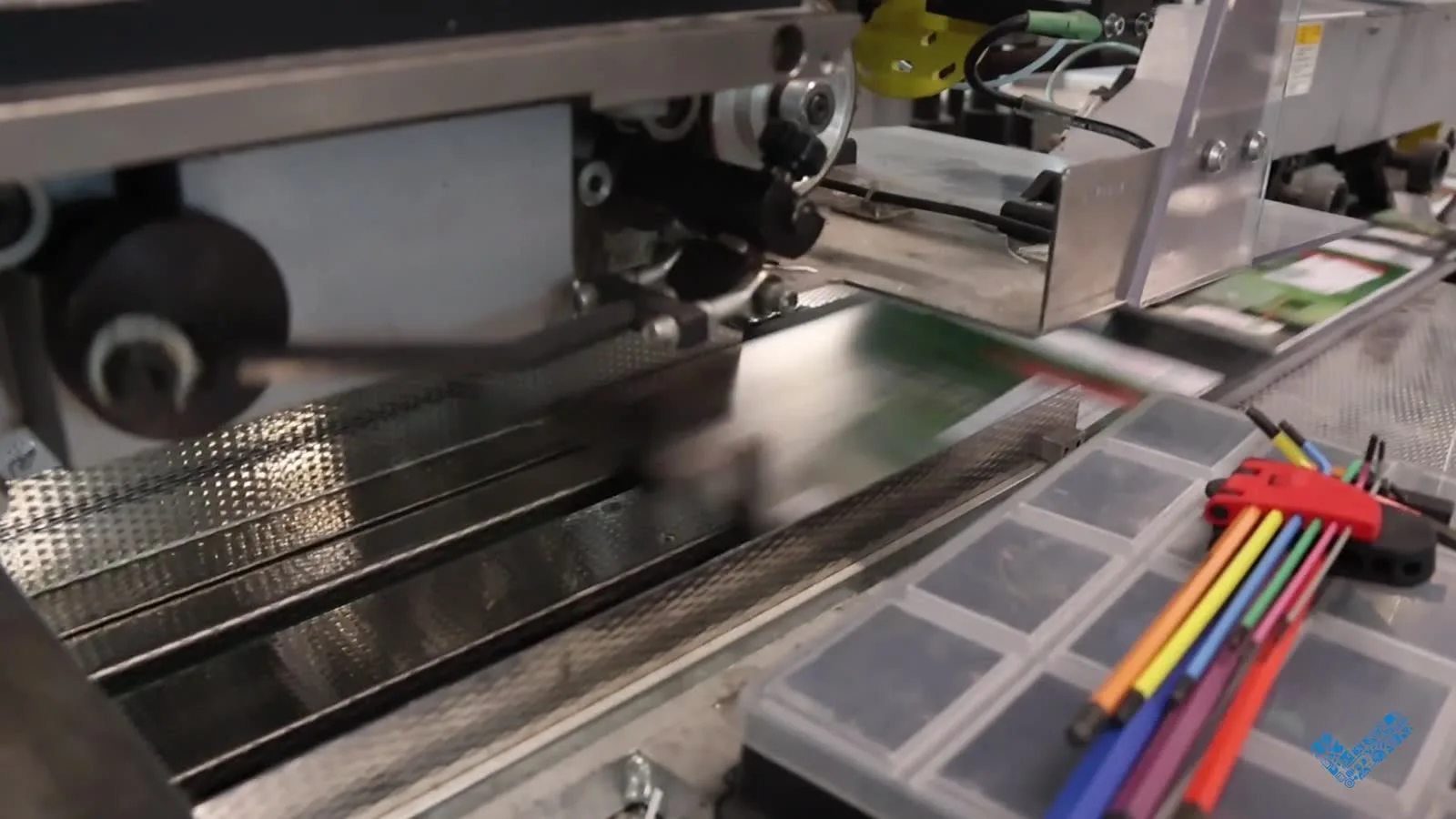
The mailings run one by one along the belt into the sealing machine.
Cane sugar film of 12 micron goes tightly around each mailing.
The edges are heat-sealed. What is inside stays together and arrives undamaged.
A colleague stacks the wrapped mailings and puts them in the roll cage, ready for dispatch.
What is banding?
Banding is packing a mailing in a paper wrap. That wrap is called a banderol. It goes around a magazine, periodical or folder, carries the address and can be printed with a message of your own. No film is involved, and usually no envelope either.
In the Netherlands we are one of the few who can still band by machine. The machines for it have all but disappeared. Ours handles up to 8,000 items an hour, which makes the banderol an everyday choice here alongside film and envelope. It takes print up to A4+ and up to one centimetre thick. If your magazine is larger or thicker, poly wrapping is the way to go.
When do you choose banding? When you send a periodical, members' magazine or magazine and want to keep the cover visible. When you want to avoid plastic: the banderol is paper and goes in the paper recycling. And when you want an extra place for a message that is not on the print itself, such as an announcement, an offer or a welcome to new members. That way one print run of the magazine still gets its own message per audience.
Printing the banderol. The banderol always carries the address. Beyond that there is room for images and text, and more room than you might think: with us a banderol is at least ten and a half centimetres wide and can be as wide as the mailing itself. A wide banderol is really a second cover. The paper can be FSC or PEFC certified.
An insert under the banderol? It is possible, but not by machine in the same run, and a loose insert falls out easily. If a folder or card must stay with it for certain, poly wrapping is usually the better choice.
For periodicals. The banderol suits the magazine of an association, publisher or trade body well. How we handle those from printing to delivery is on printing and mailing periodicals.
What is enveloping?
Enveloping is filling envelopes by machine. The inserting machine places the letter, adds the inserts, puts it all in the envelope and closes it. A personal letter with a reply card and a folder goes into the envelope in one pass.
When do you choose enveloping? When the mailing is a letter and has to arrive as a letter. An envelope gives a personal, closed impression, and the content stays out of sight until the recipient opens it. Also when several inserts need to go along that are not attached to each other.
How it works here. We envelope by machine in envelopes from C6 to C4, with up to six inserts per envelope, at up to 10,000 to 12,000 envelopes an hour. The flap can be on the long or the short side. That we also fill envelopes with the flap on the short side by machine is unusual: very few companies can.
Using a window? Then watch three things. The window film must be fully transparent, not too glossy and free of creases. The address must always stay visible, so the letter must not be able to shift in the envelope. And keep the window away from the edge: that causes problems when enveloping. PostNL's full requirements are on requirements for your mail item.
And with no wrapper at all?
A magazine can also go out unwrapped: no film, banderol or envelope. PostNL allows this on request, and we apply for it for print runs from 5,000 copies. We then print the address straight onto the cover and hand the magazine to PostNL as it is. No wrapper, no extra step and no extra weight: for a periodical with a sizeable print run, that is quick and effective.
Are there loose inserts, or does the cover need to arrive undamaged? Then a wrapper remains the better choice.
How do you choose?
Start with the content, not with the packing.
- One printed piece, such as a magazine or folder? Banding. No plastic, and the banderol is an extra place for your message.
- Several items that may be visible? Poly wrapping.
- A letter, or content that must stay out of sight? Enveloping.
- Can it go without a wrapper? Then a self-mailer or unwrapped, for a magazine from 5,000 copies. The lightest option and the least material.
Not sure, or want to see the forms side by side in price? We will work them out for you. For a mailing, the format, the weight and the number of handling steps together determine the price, and all three differ per form. How such a price is built up is on what a mailing costs.
Frequently asked questions
Can you address on film? No. The address must be on the carrier itself: on the top printed item, readable through the film, or on a loose address carrier inside the film.
Is seal film biodegradable? Our cane sugar film is not. It is made from a plant-based raw material and is recyclable, but it is not biodegradable and not compostable. It belongs with the plastic waste.
How wide is a banderol? With us at least ten and a half centimetres. Above that it can be as wide as the mailing itself. The paper can be FSC or PEFC certified.
Why can so few companies still band by machine? Because the machines for it are hardly made or used any more. We still have them.
Can you fill an envelope with the flap on the short side by machine? Yes. We fill envelopes with the flap on the long and on the short side by machine. Very few companies can do the latter.
How many inserts can go in the envelope? By machine up to six inserts per envelope, in sizes from C6 to C4.
Can an insert go under the banderol? Yes, but not by machine in the same run, and it falls out easily. If the insert must stay with it for certain, choose poly wrapping.
What is cheapest: poly wrapping, banding or enveloping? That depends on the format, the weight and the number of items. Request a quote and we will put the forms side by side for you.
Laatst bijgewerkt: 12 October 2026